You blame deadlines, the travel, the late nights that were supposed to be “just one drink.” You wake up tired, go to bed wired, and wonder if you’re the only one running on fumes. You’re not. And it isn’t only stress.
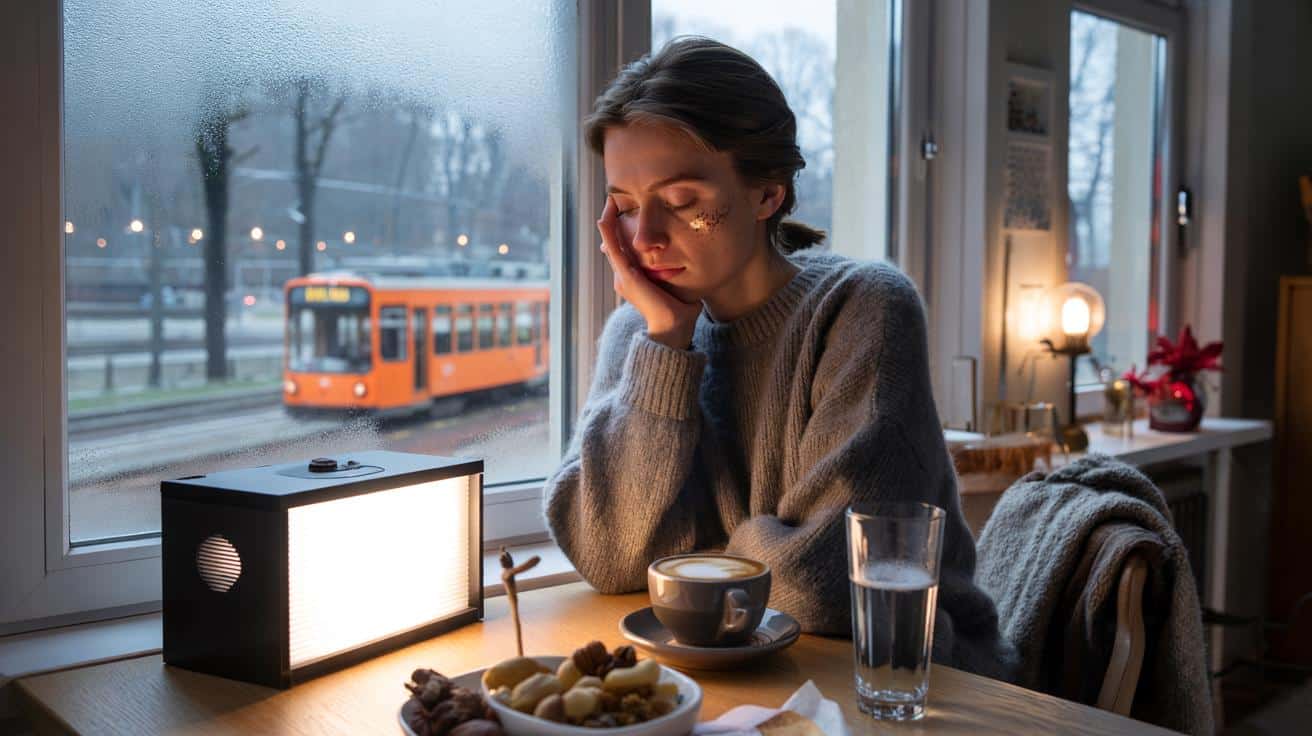
The bus windows fogged over this morning, and a man in a wool coat tapped the glass like he could force daylight out of the grey. A barista slid a cappuccino across the counter with a sympathetic shrug, as if to say, yes, it’s that time again. In offices and kitchens everywhere, people yawned without hiding it. We’ve all lived that moment where the day feels two sizes too big for the energy you have. The calendar is loud. Your body is quieter, and a bit off. What if December is quietly rewiring our bodies?
Why December tires you out more than July
First, there’s light. Or rather, the lack of it. Daylight shrinks in December, and our internal clocks drift with it, nudging melatonin to hang around longer in the morning. You feel groggy not because you’re “lazy,” but because the signal to wake is weaker. Nights stretch for parties and errands, yet mornings arrive before your biology is ready. *Call it the December drag.*
In Milan, the darkest days barely crack nine hours of sun, and much of that hides behind clouds. A friend who cycles year-round told me his commute feels “two shades dimmer,” even at noon. Fitness trackers quietly log the story: step counts dip, heart rate variability slides, and bedtimes creep later. The numbers don’t nag; they whisper. And the whisper is the same across offices and classrooms—everyone’s a bit slower, a bit more brittle, a bit more likely to scroll in bed.
Then there’s the cocktail of small things that add up. Heating dries indoor air, so you lose water faster and feel spent. Rich meals spike blood sugar, then crash it. Alcohol steals REM sleep and fragments the rest you do get. Blue light stretches the evening, tugging your circadian rhythm toward midnight. Your immune system is busier too—crammed trains, sniffly kids, recycled office air—so more energy goes to defense. Layer on the year-end push to “finish strong,” and your brain spins in decision fatigue. Put simply: your biology and your life are moving in slightly different directions.
What actually helps right now
Start with light. If you do one thing, make the first 30–60 minutes of daylight sacred. Step outside—even if it’s cloudy, even if it’s two blocks, even without sunglasses. Think of it as charging your circadian battery. Put your desk near the brightest window you have. If mornings are pitch-black, use a 10,000 lux light box for 20–30 minutes while you read or answer low-stakes emails.
Protect your wake time more than your bedtime. Go to sleep when you’re sleepy, but try to wake up within the same 30-minute window, including weekends. Choose your social nights with intent—two great evenings beat six tired ones. Keep caffeine earlier in the day and trade the 4 p.m. pastry for protein and a glass of water. Let’s be honest: nobody really does that every day. You don’t need perfect. You need better, most days.
Anchor your recovery to little rituals rather than grand plans. A short afternoon walk beats a gym session you’ll skip. A 15–20 minute “power nap” before 3 p.m. can rescue a wobbly day without wrecking the night.
“Light is information,” a sleep researcher told me. “Your eyes tell your brain what month it is. Give them a clear message in the morning, and your whole system gets the memo.”
- Morning light: 30 minutes outdoors, or a light box if it’s dark.
- Wake-time anchor: set a gentle alarm and keep it consistent.
- Evening dim-down: lower house lights 60 minutes before bed.
- Sugar swap: protein + fiber in the late afternoon.
- Party strategy: alternate drinks with water; set a “latest leave” time.
It’s not just stress, it’s timing
December isn’t out to get you; it’s just poorly timed for human biology. Your body expects strong morning light, steady rhythms, and fewer heavy meals. The month delivers the opposite, then asks for big smiles and big energy. **Stress plays a role**, but tiredness often comes from a subtle misalignment—your internal clock wanting one thing while your schedule demands another. That gap is where the fatigue leaks out.
There are other, quieter leaks too. Workplaces often collect unfinished tasks into a “before the holidays” pile, which creates an illusion that everything is urgent. It isn’t. You can close your laptop at a reasonable hour and still be a good colleague and parent. **Boundaries are not a luxury** in December; they are how you protect the energy you have left. Say yes to meaning, not to momentum.
Food and drink carry culture and comfort, and you shouldn’t fear them. Try to build simple anchors around them—eat earlier on big nights, take a short stroll after dinner, drink water like it’s part of the celebration. Your immune system will thank you for sleep, vitamin-rich meals, and calm mornings. **December is not a test**. It’s a season. Treat it like one.
If this month feels heavier than the calendar squares suggest, you’re not broken. Your body is reading the sky, the noise, the food, the obligations, and doing its best to keep up. Share the load: ask for help with the shopping, split the driving, cancel the plan that feels like a performance. People aren’t keeping score. They’re tired too. The irony is that the smallest changes—more light, steadier mornings, a kinder calendar—often create the biggest relief.
| Point clé | Détail | Intérêt pour le lecteur |
|---|---|---|
| Daylight deficit | Short days extend melatonin and blur the wake signal | Explains grogginess without self-blame; points to morning light |
| Holiday habits | Richer food, more alcohol, later nights disrupt sleep architecture | Shows quick wins: timing meals, alternate drinks, earlier dim-down |
| Year-end overload | Decision fatigue and “finish strong” pressure drain cognitive energy | Validates the feeling and justifies boundaries and shorter to-do lists |
FAQ :
- Is this seasonal affective disorder or just normal winter tiredness?Think of it as a spectrum. Feeling sleepier and a bit low is common in December. If low mood, loss of interest, or changes in appetite and sleep persist for weeks or disrupt daily life, speak with a healthcare professional.
- Will vitamin D fix my December fatigue?It can help if you’re deficient, and many people are in winter. It’s not an instant energy switch, but steady intake supports overall health. A simple conversation with your doctor can guide dosage and testing.
- How long should a nap be?Keep it short—10 to 20 minutes—ideally before mid-afternoon. You’ll wake up clearer without sliding into deep sleep that can leave you groggy or delay bedtime.
- Does a pre-dawn gym session help even under artificial light?Movement helps mood and energy. If you can, pair the workout with a few minutes of outdoor light before or after, or position yourself near a bright window. A light box can be a useful tool.
- Is going to bed earlier the only solution?Not at all. Steady wake time, strong morning light, and gentler evenings often beat a strict “early bedtime” rule. If you go to bed earlier and can’t fall asleep, focus on the morning signals instead.