“Valvole termostatiche,” the plumber called them, with a shrug that said: it’s simple. It isn’t. Turn it to 5 and the room boils. Turn it to 2 and your toes complain. Meanwhile, the boiler chugs away, eating through euros. There’s a way to set those valves so your home actually feels comfortable and your meter slows down. Not guesswork. Method.
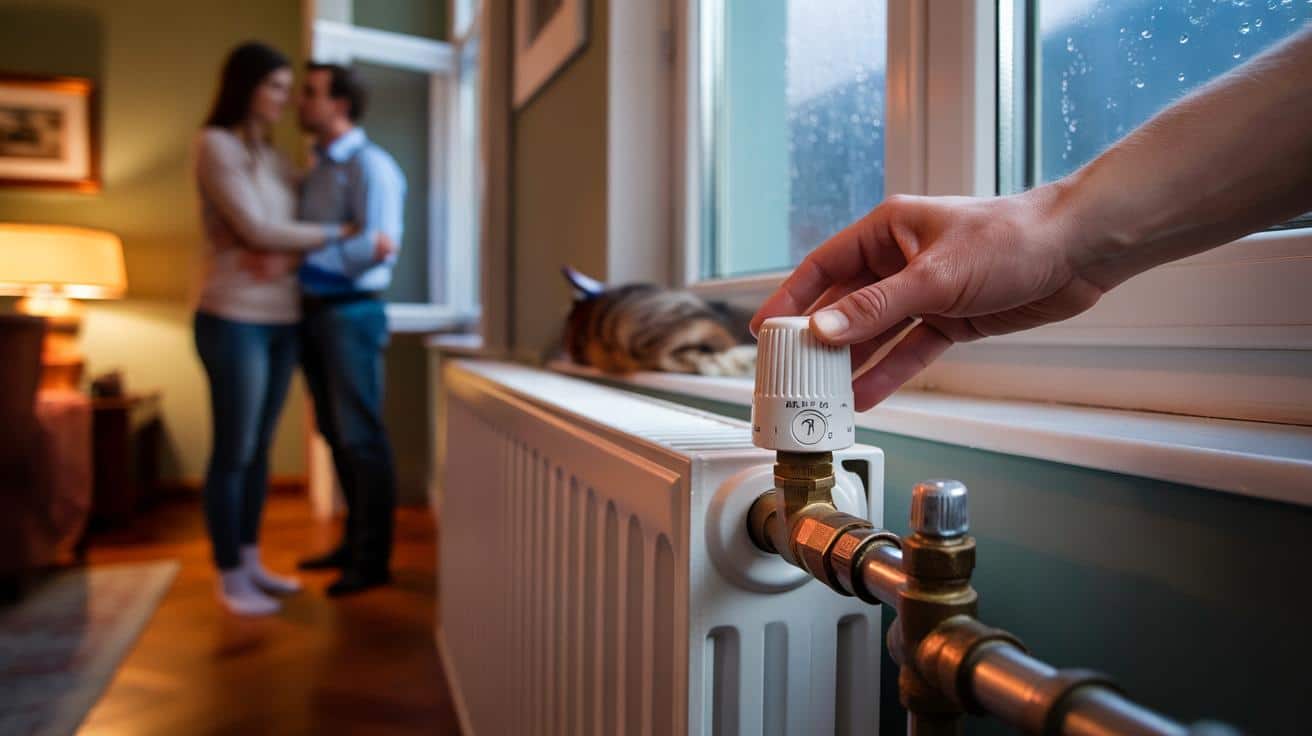
On a wet Tuesday, I watched a couple in a chilly apartment argue softly in their socks. She nudged the valve to 4. He put it back to 3. The living room warmed, then cooled, like a tide that wouldn’t decide. The cat took the radiator ledge and closed its eyes. We all stood there, listening for clicks, pretending we knew what the clicks meant. The truth is straightforward once you see it, and slightly different from what most of us do. The secret sits in the relationship between the room, the valve, and the boiler. A small click, a big change.
What a thermostatic valve really does
A thermostatic valve doesn’t “make” heat or talk to your gas meter. It senses the air near the radiator and pinches the hot water flow to hold a target temperature. Think of it like a dimmer for heat. It opens when the room is cooler than the setpoint and closes as you approach it. Quietly, automatically.
In a friend’s Milan flat, the living room sat stubborn at 22°C until we noticed every valve was set to 4. We rolled the living room down to “3” and let the other rooms settle lower. Twenty-four hours later, the ambient sat at 19.5°C and felt calmer. She messaged me the next week with a photo of her bill: down 9% without touching the boiler. Lowering average room temperature by 1°C can cut gas use by roughly 6–7%. Small dial, big lever.
Your boiler still sets the “supply temperature,” the heat in the water flowing to the radiators. The valve only decides how much of that heat a room drinks. When the boiler runs cooler (say 55–60°C on a condensing model), radiators feel gentler but your efficiency jumps. The best comfort often comes from a modest boiler temperature and valves doing fine control, not from blasting heat then slamming it shut.
How to set and use TRVs to stop wasting gas
Start by mapping rooms to realistic targets. Bedrooms like 17–18°C, living rooms 19–20°C, bathrooms 21–22°C for short windows. On most valves: star = frost (~7°C), 1 ≈ 12°C, 2 ≈ 16°C, 3 ≈ 20°C, 4 ≈ 24°C, 5 ≈ 28°C. Set living room to 3, bedrooms to just under 3, bathroom around 3–4 for morning and evening. Leave it a day. Then nudge each by a quarter-turn until it feels right. Heat likes patience more than drama.
One smart move: **Turn one room into your reference**. That’s where the main wall thermostat lives, with the valve fully open (or removed) so the thermostat sees the real room. Let the other rooms use valves to trim their comfort. If you cap every radiator hard, the boiler might short-cycle, burning gas in spurts. Keep doors closed when heating specific rooms, and give each valve space to sense air — not buried under curtains or radiator covers.
Let’s talk mistakes with a warm tone. Cranking a valve to 5 doesn’t heat faster; it just overshoots and wastes gas. Throwing windows wide with valves left open means the sensor panics and dumps heat outside. Long night-time shutdowns can let walls chill, and then the morning reheat costs extra. Let’s be honest: nobody does this every day.
“Think of thermostatic valves as guardians of a zone. Set them once with intent, then make tiny corrections. No drama, no chasing.” — Luca, heating engineer
- Bleed radiators so the top isn’t cold; air blocks waste heat.
- Keep 10–20 cm clear above the valve sensor; no thick curtains.
- If you have a condensing boiler, aim for a 55–60°C flow temp.
- Use “3” as your 20°C anchor, then adjust by quarter-clicks.
- For smart TRVs, activate “open window” detection to avoid waste.
The logic behind comfort without waste
We’ve all had that moment when the room feels tepid and the hand goes straight to “5.” Resist it. **Don’t chase quick heat**. You want steady-state: a modest boiler temperature, a slight temperature difference across each radiator, and valves that dose heat quietly. If your boiler has weather compensation, let it lower flow temperature on mild days. Your valves will barely move, and your bill breathes out.
Your senses can guide you better than any chart. If the radiator is roaring hot then goes stone cold, you’re riding extremes. Aim for radiators that feel warm most of the time, not scorching. If doors are open and rooms fight each other, nudge the cooler room up and the warmer room down rather than pushing the boiler harder. **1°C down = ~6% gas saved**. It reads like marketing, but the physics shows up on bills.
If you have smart TRVs, schedule small set-backs, not wild swings. Drop bedrooms to 16–17°C at night and bring them back gently before wake-up. In homes without a central thermostat, at least leave one radiator free (valve fully open) in a core space so the boiler knows when to stop cycling. And if your valve heads are old and sticky, replace the heads before you blame the boiler. Soyons honnêtes : personne ne fait vraiment ça tous les jours.
Tuning over a week: small moves, real savings
Day one, set by room: living 3, bedrooms just under 3, bathroom 3–4. Day two, listen to your life. If you’re working from home, bring the office to 19°C and let the hallway drift cooler. Day three, trim the boiler flow temperature by 5°C and watch if comfort stays steady. The valves will open a little more, your boiler will condense more often, and the meter slows.
By day four, seal little leaks in your routine. Keep doors closed when heating is on. Stop ventilating for long stretches; two sharp five-minute bursts do better than 30 minutes of half-open windows. Day five, bleed radiators and dust the fins. Tiny chores, measurable results. If you added smart TRVs, use geofencing or time blocks so heat follows your presence rather than a rigid timetable.
At the end of the week, you’ll own the rhythm of your home. Not perfection, just consistency. A calmer sound from the boiler, fewer swings in room feel, and that quiet satisfaction when the bill lands and it’s not as brutal as last year. Share your settings with a neighbor; every building learns faster when stories cross the landing.
| Point clé | Détail | Intérêt pour le lecteur |
|---|---|---|
| Set by room, not by habit | Living 19–20°C, bedrooms 17–18°C, bathroom 21–22°C | Comfort where you need it, savings where you don’t |
| One reference room | Valve fully open, wall thermostat in that space | Stable boiler cycles, fewer spikes and waste |
| Lower flow temperature | 55–60°C on condensing boilers, weather-compensated | Higher efficiency, valves work smoothly |
FAQ :
- What number equals 20°C on my valve?On most manual heads, “3” lands around 20°C. Use it as your anchor, then adjust by quarter-turn based on feel and a cheap room thermometer.
- Should I turn off heating at night to save gas?Better to set a gentle setback. Let bedrooms drop to 16–17°C and living spaces drift down. Turning everything off can cool walls, making morning reheat costly.
- Will setting the valve to 5 heat the room faster?No. TRVs don’t speed the radiator; they only cap the final temperature. “5” risks overshoot and wasted gas without shortening warm-up time.
- Do thermostatic valves work without a central thermostat?They regulate rooms locally, but the boiler needs a signal to stop. Keep one radiator unrestricted in a core room or add a central thermostat or smart hub.
- My radiator is warm at the bottom, cold at the top. What now?Bleed it with a key until air hisses out and water appears. If it stays uneven, check the lockshield balance or call a pro to balance the circuit.