We’ve all had that moment when the bag is open and the ash is halfway there. You pause, though, and wonder if you’re throwing away something quietly useful.
The morning I learned, the house still smelled like smoke and oranges. A neighbor waved from the gate, saw the bucket, and laughed in that warm, teasing way that makes you feel seen: “Fermi tutti! Don’t dump it.” We stood in the yard, breath ghosting in the air, while she sifted a pinch of powder between her fingers like a baker checking flour. She showed me three little tricks that felt part chemistry class, part folk memory, and entirely practical for an ordinary Tuesday. The ash wasn’t trash. A tiny treasure sat in that bin.
Ash isn’t waste — it’s chemistry you can touch
What looks like dirt is actually mineral-rich residue from wood that once held sunlight. It carries potassium, calcium carbonate, and trace elements that quietly change surfaces and soil. It’s messy, yes, but it’s also surprisingly gentle when used right.
Think of the average wood stove: one generous bucket of ash per week through winter, often from clean, seasoned logs. Multiply that by a neighborhood, a town, a chilly valley, and you picture a mountain of potential headed to the bin. In many homes I’ve visited, the black metal ash pail is as common as the kettle. It’s a small domestic science kit hiding in plain sight.
Here’s the simple logic. Wood ash is alkaline, fine, and mildly abrasive when dry. That makes it polish tarnish, raise pH in acidic soil, and grip slick ice. Treat it with the respect you’d give vinegar or baking soda: helpful, but not for everything. Keep it dry, cool, and never from treated or painted wood, and it becomes a safe tool you’ll reach for again.
Three genius, zero‑cost ways to reuse fireplace ash
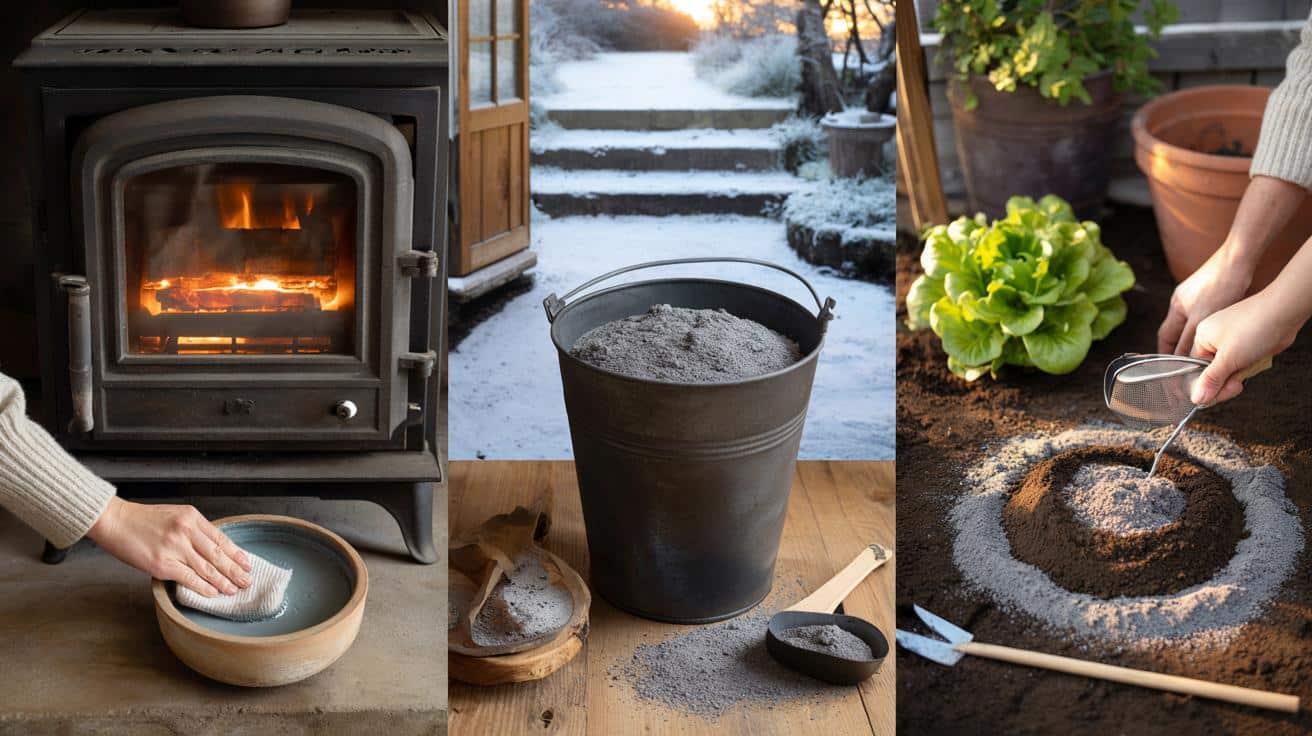
Make a gentle scrub for glass and metal. Sift fine, cool ash, then mix a spoonful with a little water or vinegar to form a soft paste. Rub with a damp cloth on stove glass, cloudy jars, or tarnished cutlery, then rinse and buff. That silky, barely gritty feel is what lifts soot and tarnish without harsh chemicals.
Feed tired soil the right way. Sprinkle a light dusting—about a thin teacup per square meter—around beds that slant acidic, then rake in and water. Skip acid lovers like blueberries, azaleas, and rhododendrons, and don’t pile ash against stems. It also makes a dry ring that slugs hate crossing and perks up a compost heap in tiny doses. Let’s be honest: nobody really does that every day.
Win winter sidewalks and greasy driveways. On icy steps, a handful of dry ash adds instant traction and a touch of melt as the dark dust drinks the sun. On fresh oil drips in the garage, cover with ash, wait, then sweep—most of the stain leaves with the powder.
“Think of ash like a toolbox: gritty enough to grip, alkaline enough to clean, and free,” said a groundskeeper who keeps a lidded ash bucket by the back door.
- Only use cold ash stored in a metal container with a lid.
- Keep it bone-dry for traction, polishing, and odor control.
- Never use ash from treated, painted, or coal-derived fuel.
- Test your cleaning paste on a hidden spot first.
- In the garden, go light and skip acid-loving plants.
From dusty chore to circular habit
Once you see ash as a resource, your routine shifts a few centimeters toward clever. The same ten minutes you used to spend bagging it can polish a cloudy pane, sweeten a bed of soil, or make the front steps safer after a frost. You can leave the bottle of spray under the sink a little longer and still get that satisfying, chalk-clean shine on the stove door. Share a scoop with a neighbor and watch the eyebrows go up. That small moment—turning waste into a quiet win—has a way of making a gray morning feel a little brighter.
| Point clé | Détail | Intérêt pour le lecteur |
|---|---|---|
| Garden boost | Light dusting raises pH and adds potassium; avoid acid-loving plants | Healthier beds without buying additives |
| Eco-clean polish | Fine ash paste lifts soot and tarnish; rinse and buff | Shiny glass and silver, zero harsh chemicals |
| Winter traction | Dry ash grips ice and darkens surfaces for mild melt | Safer steps and paths when salt runs out |
FAQ :
- Is any wood ash safe for these uses?Use ash from clean, untreated, unpainted wood only. Skip coal ash and anything from composite logs with binders.
- How long should I let ash cool before using it?At least 48 hours in a metal bin with a lid. Stir once with a metal scoop; if you see no glow or warmth, it’s ready.
- Can ash scratch my stove glass or silver?Fine, sifted ash is gentle, but test first. If it feels sandy or has grit, sift again or don’t use on delicate finishes.
- Will ash harm my soil if I add too much?Heavy doses can spike pH and lock nutrients. Start small, spread thin, and avoid acid-loving plants—think “pinch,” not “fistful.”
- Does ash actually melt ice or just add grip?Mostly grip. The dark color absorbs sunlight and helps a little with melt, but its real magic is traction when you need it fast.