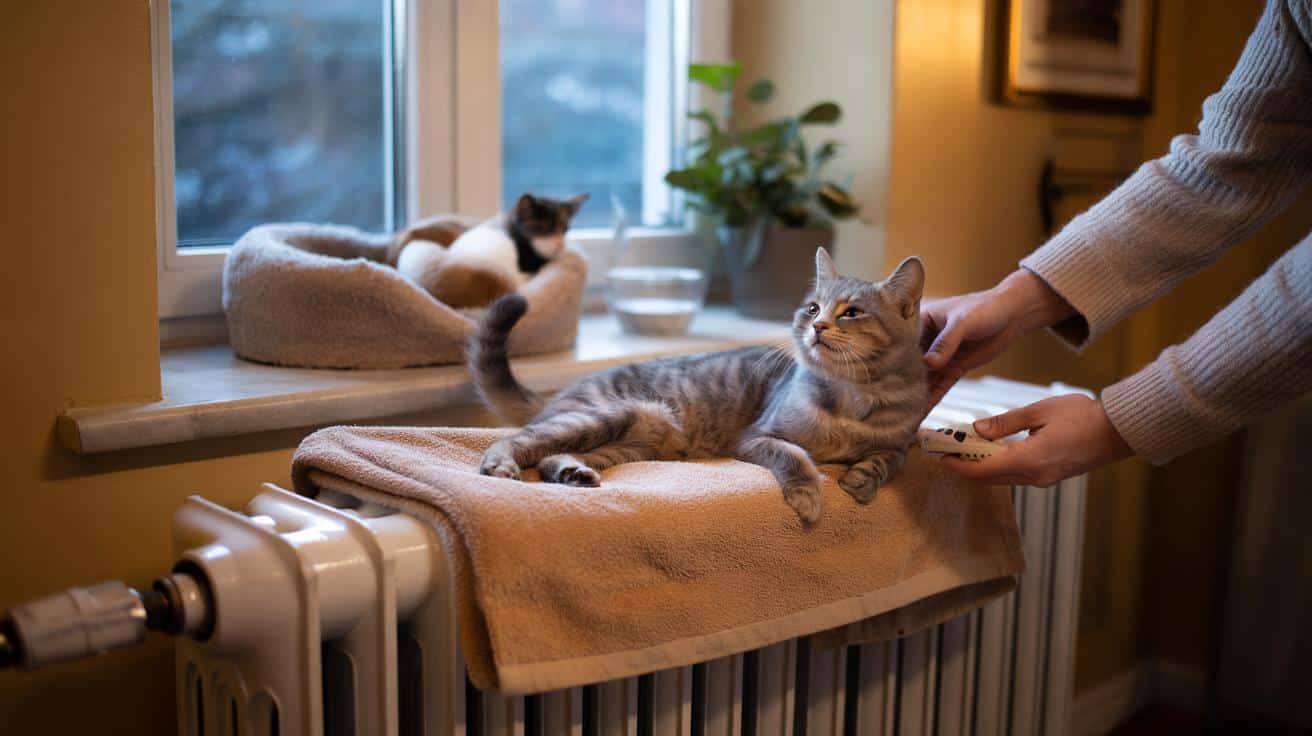
When the first cold snaps hit, many Italian homes hum back to life with their cast‑iron heaters. Cats hear that faint hiss too—and like magnets, they glide onto the warmest spot in the house. The worry comes later: is “boiling” comfort turning into a real burn risk, or just a winter ritual that looks scarier than it is? A veterinarian weighs in, with practical ways to keep those paws and bellies safe.
My neighbor’s tabby made her silent morning commute, paws flowing over the metal rungs, and then flattened herself into a satisfied comma on the narrow ledge. I could smell the faint, dusty heat that always rolls out on day one of the season. She blinked, tail tip twitching, as if she owned the sun. I wanted to nudge her off—and didn’t. Curiosity won.
Do cats really get burned on “boiling” radiators?
Cats chase heat for the same reason we clutch mugs: warmth calms muscles and lulls the nervous system. Most household radiators in Europe run between 50°C and 75°C at the surface, depending on the system and settings. That range can sting bare skin with prolonged contact. Cats come with built‑in insulation—fur and fat—but paw pads and thin‑fur zones still touch metal. The result is that true burns are uncommon on standard hot‑water radiators, yet not mythical—especially in edge cases.
Veterinarians describe winter as a “spike in cozy injuries.” That includes singed whiskers from stoves, mild pad scalds on uncovered radiators, and the odd belly hot spot on hairless breeds. A Milan vet told me about a Sphynx who fell asleep against a portable electric heater and woke with reddened skin and a blister the size of a coin. Another file showed an elderly cat with arthritis, less likely to shift positions, who developed a small burn on a back pad after hours draped over a cast‑iron radiator set high. We’ve all seen that slow, melting sprawl on a warm sill.
Here’s the logic in plain terms. Cats can regulate heat by moving—micro‑adjustments, a stretch, a flip to the cooler side. That reflex protects them. Burns need two ingredients: high temperature and time. Fur delays conduction, so short perches rarely cause trouble on typical radiators. The risk jumps when surfaces exceed 60°C and contact is steady, when a cat is elderly, sedated, or neuropathic, or when the heat source is radiant and concentrated (fan heaters, infrared panels). A humid room also “feels” hotter to skin. Small variables stack fast.
Turn the heater into a safe haven, not a hazard
Start with a simple test. Touch the radiator with the back of your hand for seven seconds. If you yank away, it’s too hot for lingering paws. Aim for a surface under about 50–52°C for cat lounging. An inexpensive infrared thermometer helps, and it’s oddly satisfying to use. Slip on a radiator hammock that hooks over the panel, or layer two folded towels to create an air gap. That little pocket of space disperses heat and saves bellies.
Watch the “weak points.” Hairless cats and kittens have less insulation; elderly cats may nap too deeply to self‑correct. Avoid draping thick blankets directly over thermostatic valves, which can trick the system and overheat metal. Don’t leave portable electric heaters running unattended, especially those with exposed grilles. Cords invite chewing, and a startled leap can tip a unit. Let’s be honest: nobody does that every day. Build two safe warm stations so your cat has choices and you have peace of mind.
There’s also the behavioral angle: cats seek warm, elevated, predictable. Meet all three and they’ll pick the safe spot you offer. Place the perch by a window for bonus sun. Encourage movement with a second cozy bed across the room, nudging micro‑breaks from long heat soaks. Keep a small bowl of water nearby, since heat can nudge dehydration and dry out pads.
“I don’t tell people to ban radiators,” says Dr. Elena B., a Turin veterinarian. “I tell them to control the temperature, add a barrier, and check the paws. Most injuries I treat are avoidable with those three habits.”
- Quick check: radiator surface under ~52°C, or the seven‑second hand test feels tolerably warm, not biting.
- Barrier: a hammock, folded towel, or wooden shelf that creates airflow between cat and metal.
- Vulnerable cats: hairless, seniors, sedated, or neuropathic—limit direct contact and offer heated pet pads with thermostats.
- Daily scan: look for redness, darkened pads, limping, excessive licking, or new scabs.
- Room care: keep humidity around 40–50% to protect skin and make heat feel gentler.
What winter with a radiator cat really looks like
Once you see the pattern, you can relax into it. Radiators aren’t villains; they’re stage props in a seasonal drama that cats direct. Put a safe perch where your cat wants to be, keep the surface from sliding into the burn zone, and check the “usual suspects” on paws and bellies a few times a week. You’ll notice tiny tells—how long your cat stays put, whether she flops or perches, what time of day she shifts. These are your early warnings. Most households find a sweet spot where the radiator hums, the cat snores, and nobody ends up at the clinic. Share that template with a friend. It spreads faster than any tip list.
| Point clé | Détail | Intérêt pour le lecteur |
|---|---|---|
| Real burn risk | Uncommon on standard radiators, higher with high temps, long contact, or vulnerable cats | Calibrates concern without panic |
| Simple safety setup | Barrier (hammock/towel) + sub‑52°C surface + second warm station | Actionable steps in minutes |
| Warning signs | Redness, darkened pads, limping, licking, scabs, flinching from touch | Know when to intervene or call the vet |
FAQ :
- Can a cast‑iron radiator burn my cat’s skin?If the surface runs hot (around or above 60°C) and your cat lies still for long periods, yes. Add a barrier and keep the temperature in a moderate range to make burns unlikely.
- Are hairless breeds at higher risk?Yes. With little insulation, Sphynx and similar cats can develop hot spots faster. Offer a heated pet pad with a low thermostat and a washable cover instead of direct metal.
- Is a portable electric heater safer than a radiator?Not necessarily. Concentrated radiant heat can be harsher, and units can tip. Choose models with tip‑over shutoff and a cool‑touch grille, and keep them supervised.
- What temperature should I aim for on the radiator surface?A comfortable target is under 50–52°C for lounging. Use an infrared thermometer or the seven‑second back‑of‑hand check as a rough guide.
- What should I do if I suspect a minor pad burn?Gently cool the area with room‑temperature water for a few minutes, keep your cat from licking, and call your vet for guidance. Skip ice, ointments, or bandaging unless directed.