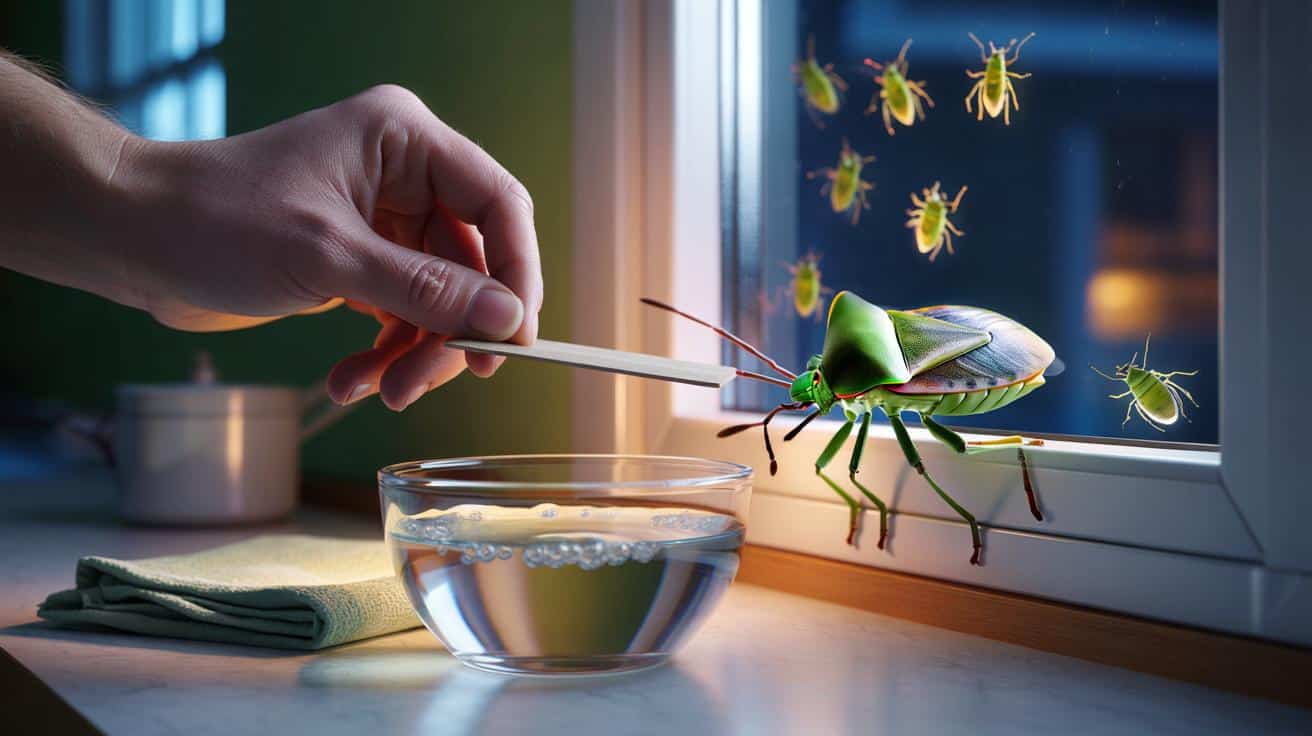
That quick pinch is the worst move. Smash a green stink bug indoors and you don’t just get the smell — you can set off a small chain reaction that invites more.
The kitchen light was on, the kind that makes every speck look like a star. One green shield bug — Cimice verde, if you grew up hearing your grandmother curse them — clung to the window frame. I went for the dish towel. My partner shot me a look: “Don’t crush it.” I did it once, last autumn, and the scent climbed the wall like a ghost you can’t paint over. Next evening, two more tapped at the glass, then three. The room felt like a traffic sign only the bugs could read. The scent was writing invitations.
Why smashing a green stink bug backfires
Crushing a green stink bug bursts tiny glands packed with sharp-smelling aldehydes. The odor hangs, not just in your nose but on surfaces, fabrics, and air currents. You turn a small incident into a lingering signal.
We’ve all had that moment when you flatten one on instinct, then open the window and wave a towel like you’re chasing a cloud. A neighbor in my building logged every sighting for a month. Nights after a smash, her notes ticked up: two on the frame, one on the plant, one in the lampshade. It didn’t look like coincidence from where she sat.
Stink bugs navigate by scent as much as sight. They cue on plant aromas, warmth, and chemical trails that hint at shelter. When you crush one, the blast can act like a broadcast: danger to some, curiosity to others. In tight spaces — stairwells, kitchen corners, behind picture frames — those molecules pool. **You end up creating the very scent-map that keeps the traffic flowing.**
What to do instead, step by step
Go for capture, not carnage. Fill a wide bowl with warm water and a generous squeeze of dish soap, then hold it under the bug and nudge gently with a card. Stink bugs reflexively drop. The soap breaks surface tension, and the bug sinks quietly. No burst. No billboard.
Clip a thin stocking inside your vacuum hose with a rubber band if you prefer the quick zip. Suck the bug, then tie off the stocking and take it outside. Don’t run the vacuum without that “net,” or the odor can set up camp in the canister. Turn off porch lights, pull window screens tight, and stash fruit bowls overnight. Let’s be honest: no one actually does that every day. Do it on the warm nights after rain, when they fly in numbers.
“Crushing a stink bug is like breaking a tiny perfume bottle in your hallway — the scent takes the story from there.”
- Mix: 1 liter of water + 1 teaspoon dish soap for a fast, quiet dunk.
- Keep a card and a jar by the window like a mini bug station.
- Seal pencil-thin gaps with silicone around frames before the first cold snap.
- Try a peppermint oil dab on cotton by the sill; reapply weekly in season.
- Park exterior lights on warm-white or switch them off after 9 pm.
What that smell really does — and how to change the script
The “stink” isn’t just unpleasant. It’s information. Those punchy notes — think green beans and coriander gone wild — can set other bugs on the move. Some peel away. Some come to investigate. In a small flat, one smash can feel like a drumbeat that never resolves.
Think air, not just walls. Warm air lifts the odor toward vents and curtains, then drops it along cool glass and baseboards. Plants near a sunny window add their own bouquet. Together, that’s a lounge sign in bug language. *You can actually smell your mistake.*
Change the stage and you change the cast. Swap squashing for soap-and-drop. Pull herbs and fruit bowls a meter from the window for a week. **Seal the tiny gaps before the first cold night.** Use a vacuum “stocking trap” when you’re rushed. None of this needs to be perfect. It just needs to break the scent story the bugs are reading.
The funny thing about green stink bugs is how quickly they teach you about air. One smash is chaos. One calm move is quiet. You start to notice the warm stripe of sun on the window, the way your basil leans into the glass, the breeze that lifts the curtain. Change those little things and your evenings change too. **Soap-and-water works without the smell.** The house feels less like a stage set for a bug parade, more like yourself again. Friends will tell you you’re overthinking a leaf-shaped insect. Then they’ll text you at 10 pm asking where to buy that jar with the lid.
| Point clé | Détail | Intérêt pour le lecteur |
|---|---|---|
| Don’t crush | Crushing releases a strong odor that lingers and stirs more activity | Fewer repeat visits, no stains or long-lasting smell |
| Capture with soap | Warm water + dish soap, gentle nudge with a card, bug drops and sinks | Silent, fast, and no chemical spray indoors |
| Seal and dim | Close tiny gaps and reduce night lighting by windows and doors | Fewer entries during peak evening flights |
FAQ :
- Do green stink bugs bite people?They don’t seek to bite. They may probe skin if handled roughly, which can pinch, but they’re not after blood.
- Will the smell really attract more bugs?The odor changes bug behavior and can draw attention in tight spaces. It often leads to more activity and sightings in the same area.
- Are essential oils a good repellent?Peppermint or tea tree can help mask cues on sills and frames. Use small dabs and test surfaces first.
- Is it safe to vacuum them?Yes, with a stocking liner in the hose so they don’t reach the canister. Empty outside right away.
- When are green stink bugs most likely to come indoors?Late summer to early autumn, on warm evenings and before cool snaps, as they search for sheltered spots.